
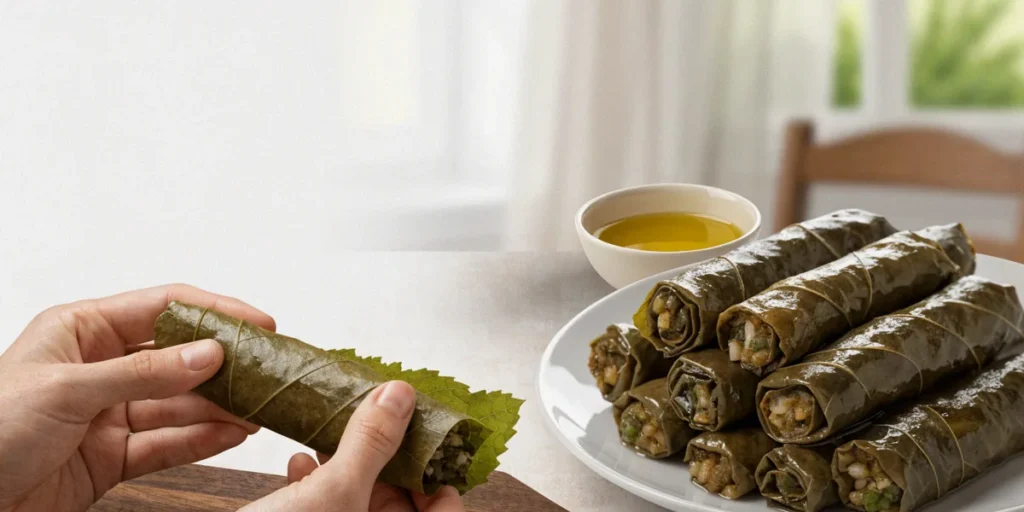
Stuffed Grape Leaves Step by Step: A Plant-Based Guide for Canadian Cooks
We’ll show you how to make tender, flavorful stuffed grape leaves from scratch, with a wholesome plant-based twist that’s perfect for Canadian kitchens. Whether you’re cooking for a holiday gathering, a weekend meal prep session, or a potluck on a snowy February evening, these little rolls deliver big flavor without any animal products. Our version swaps the traditional rice-and-meat filling for protein-packed quinoa and a creamy tahini dressing, so you get something that’s satisfying, nourishing, and genuinely delicious.
What Are Stuffed Grape Leaves?
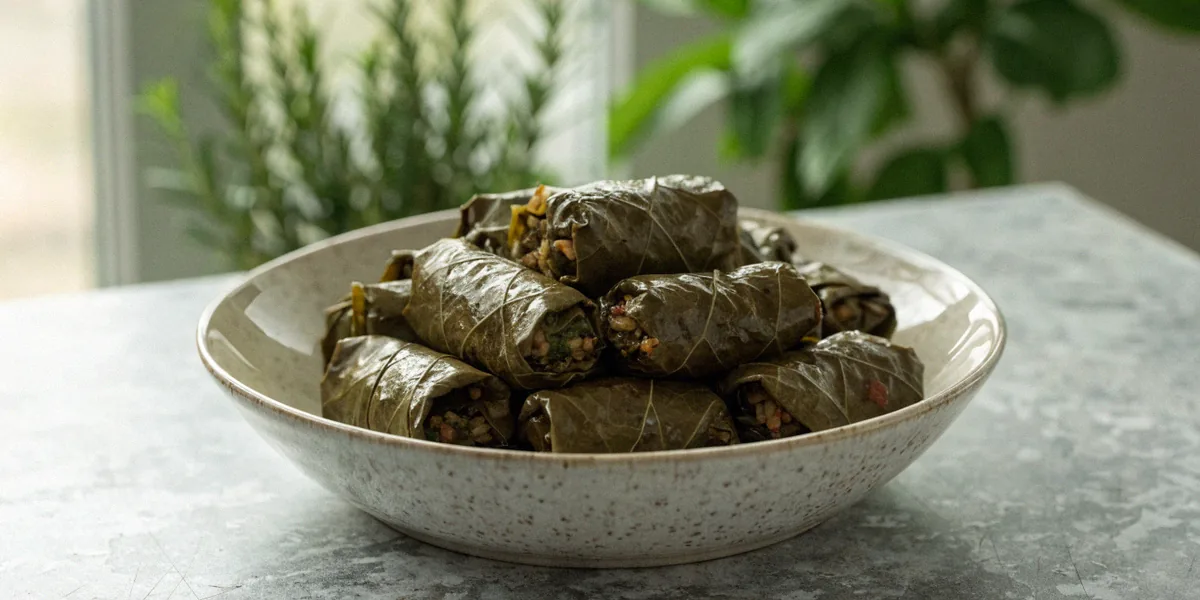
Stuffed grape leaves — known as dolma in Turkish, dolmades in Greek, and warak enab in Arabic — are vine leaves wrapped around a savory filling and cooked until tender. They show up everywhere from Beirut to Athens to Toronto, and each culture has its own spin. The common thread is the leaf itself: slightly tangy, a little chewy, and the perfect edible package for seasoned grains, herbs, and spices.
For our plant-based version, we skip the ground meat entirely and lean on quinoa for body and tahini for richness. The result is a roll that holds together beautifully and tastes just as good cold as it does warm. If you’ve never bought grape leaves before, don’t worry — they’re commonly available at Canadian grocery stores like Loblaws and Bulk Barn, usually in the international or pickle aisle. A standard 450-gram jar holds roughly 60 to 70 leaves, which is more than enough for a full batch.
A Brief History of Dolma
The word “dolma” comes from the Turkish verb dolmak, meaning “to be stuffed.” Ottoman palace kitchens perfected the technique centuries ago, stuffing everything from peppers to eggplant to vine leaves. Greek cooks adopted the vine leaf version as dolmades, and across the Levant, families still roll them by the hundreds for weddings and holiday tables. The dish traveled with immigrants to Canada, where it became a staple at Middle Eastern bakeries, church fundraisers, and family kitchens from Halifax to Vancouver.
Why We Love This Plant-Based Version
Traditional dolma often uses white rice and sometimes ground lamb or beef. We replace both with quinoa, which brings complete protein and a pleasant nuttiness. A tahini-lemon mixture stirred into the filling adds creaminess without dairy, and it echoes the sesame notes you’d find in many Middle Eastern kitchens. This version is naturally gluten-free, freezer-friendly, and sturdy enough to travel to a potluck without falling apart.
Ingredients You’ll Need
Here’s everything for a batch of about 40 rolls. We keep the list tight so you can shop in one trip.
- 1 jar (450 g) grape leaves in brine, drained and rinsed
- 1½ cups cooked quinoa (white, tri-color, or a mix)
- ⅓ cup tahini — we reach for President’s Choice or Compliments, both widely available in Canada
- Juice of 2 lemons, plus extra wedges for serving
- 1 small onion, finely diced
- 3 cloves garlic, minced
- ¼ cup chopped fresh parsley
- 2 tbsp chopped fresh mint
- 1 tsp ground cumin
- ½ tsp ground cinnamon
- ½ tsp smoked paprika
- Salt and black pepper to taste
- 3 tbsp olive oil, plus more for drizzling
- 1½ cups vegetable broth or water for cooking
The Star Ingredients: Quinoa and Tahini
Quinoa is a staple in Canadian health food stores and bulk sections — you’ll find it at Bulk Barn, Costco, and most grocery chains. It cooks in about 15 minutes and holds its shape well, which matters when you’re stuffing leaves. Tahini, meanwhile, is the quiet hero here. It thickens the filling, adds a subtle bitterness that balances the lemon, and gives the rolls a silky texture. If your tahini has separated, stir the whole jar before measuring — the oil always rises to the top.
Optional Add-Ins for Extra Flavor
Once you’ve made the base recipe a few times, try any of these:
- 2 tbsp dried currants or chopped dried cranberries for sweetness
- ¼ cup toasted pine nuts or chopped walnuts for crunch
- 1 tsp dried oregano or sumac for a brighter, more herbal note
- 1 tbsp tomato paste stirred into the onion mixture
Step-by-Step Instructions
Rolling grape leaves takes a bit of practice, but our team has a few tricks that make it click fast. Set aside 45 minutes for your first batch — after that, you’ll move much quicker.
Preparing the Grape Leaves
- Drain the jar and gently separate the leaves under cool running water.
- Trim off any thick stems with kitchen scissors.
- Pat leaves dry and stack them on a plate, covered with a damp towel so they don’t dry out.
- Set aside any torn leaves — you’ll use them to line the bottom of the pot.
Making the Quinoa-Tahini Filling
- Warm the olive oil in a skillet over medium heat. Sauté the onion for 5 minutes until soft.
- Add the garlic, cumin, cinnamon, and paprika. Cook for 30 seconds until fragrant.
- In a bowl, whisk the tahini with the lemon juice. It will seize up at first — keep whisking, then add 2–3 tbsp of water until it loosens into a creamy sauce.
- Fold in the cooked quinoa, sautéed onion mixture, parsley, and mint. Season generously with salt and pepper. Taste and adjust — the filling should be a touch saltier and more lemony than you’d eat on its own, since the leaves mellow it out.
Rolling Techniques for Beginners
- Place one leaf shiny-side down on a flat surface, stem end facing you.
- Spoon about 1 tbsp of filling near the stem end. Don’t overfill — a common beginner mistake.
- Fold the bottom edge over the filling, then fold in the two sides like an envelope.
- Roll firmly toward the top point. The roll should feel snug but not tight enough to split the leaf.
- Repeat with the remaining leaves, packing finished rolls tightly into a heavy pot as you go.
Cooking and Serving
Line the bottom of a heavy pot with torn leaves. Arrange the rolls seam-side down in tight layers. Drizzle with olive oil and pour in the broth — it should come about halfway up the rolls. Place a heavy plate directly on top to keep them submerged, then cover the pot and simmer gently for 45 minutes. Let them cool in the pot for at least 30 minutes before serving. They firm up as they cool, so patience pays off here.
Tips for Perfect Stuffed Grape Leaves
Our team has rolled hundreds of these, and most problems come down to two things: leaf handling and filling texture. Get those right and you’re set.
How to Prevent Tears
- Don’t overfill — 1 tbsp is plenty for a medium leaf.
- Roll on a clean, dry surface so the leaf doesn’t stick.
- If a leaf tears, patch it with a small piece of another leaf or set it aside for lining the pot.
- Keep unused leaves under a damp towel the whole time.
Make-Ahead and Storage Tips
Canadian winters make this a great make-ahead dish for potlucks and gatherings — you can roll them a day in advance and refrigerate before cooking, or cook them fully and store in the fridge for up to 4 days. They also freeze beautifully: layer them in a freezer-safe container with parchment between rows, and they’ll keep for 2 months. Thaw overnight in the fridge and serve cold or gently rewarmed.
Serving Suggestions and Variations
Stuffed grape leaves shine on a mezze platter alongside hummus, baba ganoush, olives, and warm pita. We also love them as a light lunch with a lemony chickpea salad.
Classic Pairings
- Whisked tahini sauce with lemon and garlic for dipping
- Lemon wedges for squeezing over the top
- A crisp cucumber-tomato salad with olive oil and sumac
- Warm flatbread and a bowl of good olive oil
Regional Twists from Canadian Kitchens
We’ve seen readers swap quinoa for brown rice, add dried cranberries for a prairie-style sweetness, or fold in chopped kale for extra greens. For a Canadian twist, pair stuffed grape leaves with a crisp Riesling from Niagara — the wine’s bright acidity cuts through the tahini and lemon beautifully. An Ontario or BC Pinot Gris works well too.
FAQ
Can I use fresh grape leaves instead of jarred?
Yes, if you have access to unsprayed vines in late spring or early summer. Blanch fresh leaves in boiling water for 30 seconds, then transfer to ice water and pat dry. Jarred leaves are far more convenient and available year-round at Loblaws, Bulk Barn, and most Canadian grocers.
How long do stuffed grape leaves last in the fridge?
Cooked rolls keep for up to 4 days in an airtight container. Store them with a little of their cooking liquid to keep them moist, and bring to room temperature before serving for the best flavor.
Can I make these without tahini?
You can, but you’ll lose some of the creaminess. A good substitute is ¼ cup of smooth natural peanut butter or sunflower seed butter, thinned with lemon juice and water. The flavor will shift slightly but the texture stays rich.
Are stuffed grape leaves gluten-free?
Our quinoa-tahini version is naturally gluten-free, as long as your vegetable broth and any add-ins are certified gluten-free. Always check labels on jarred grape leaves too, since some brands add preservatives.
What if my rolls burst during cooking?
Bursting usually means they were overfilled or rolled too tightly. Next time, use less filling and roll with gentle pressure. Even if a few split, they’ll still taste great — just scoop them out carefully with a slotted spoon.
We hope this guide gives you the confidence to roll your first batch — and your fiftieth. The process is quietly meditative: leaf, fill, fold, roll, repeat. Once you’ve got the rhythm, it becomes one of those kitchen rituals you look forward to. Share your results with our community on Instagram or in the comments below, and remember that wholesome plant-based cooking is a joyful adventure — one little roll at a time.