
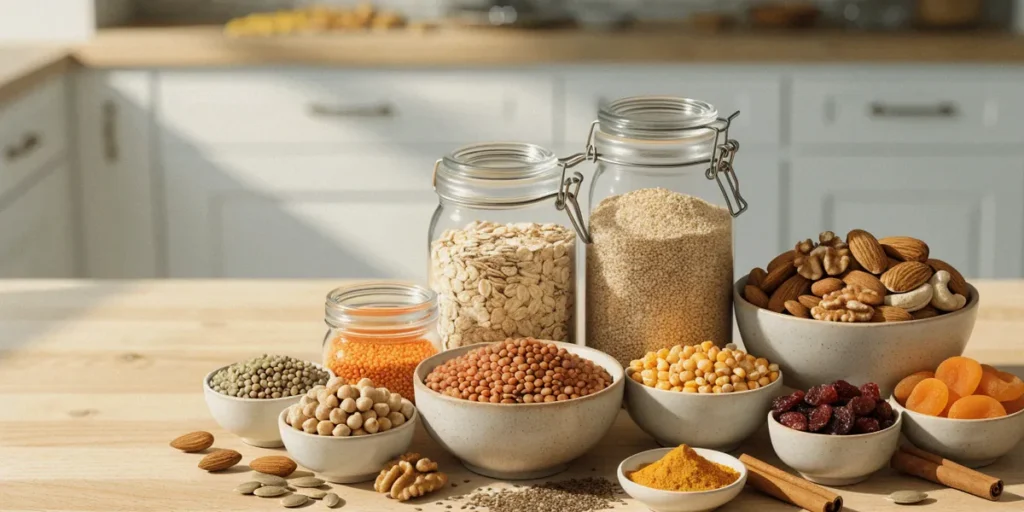
Plant-Based Pantry Staples: Our Ultimate Guide for Canadian Home Cooks
It’s 6 p.m. on a Tuesday in February, the wind chill is doing its worst outside, and you’re standing in front of a pantry that looks suspiciously empty. There’s half a bag of quinoa, a lonely can of chickpeas, and a jar of tahini with maybe two tablespoons left. Sound familiar? We’ve been there more times than we can count. The good news is that a handful of well-chosen staples can turn that sad shelf into dozens of wholesome plant-based meals. Below, we’re sharing the pantry list our team actually relies on, with a Canadian twist — brands you can find at home, from coast to coast to coast.
Why a Well-Stocked Pantry Matters for Plant-Based Cooking
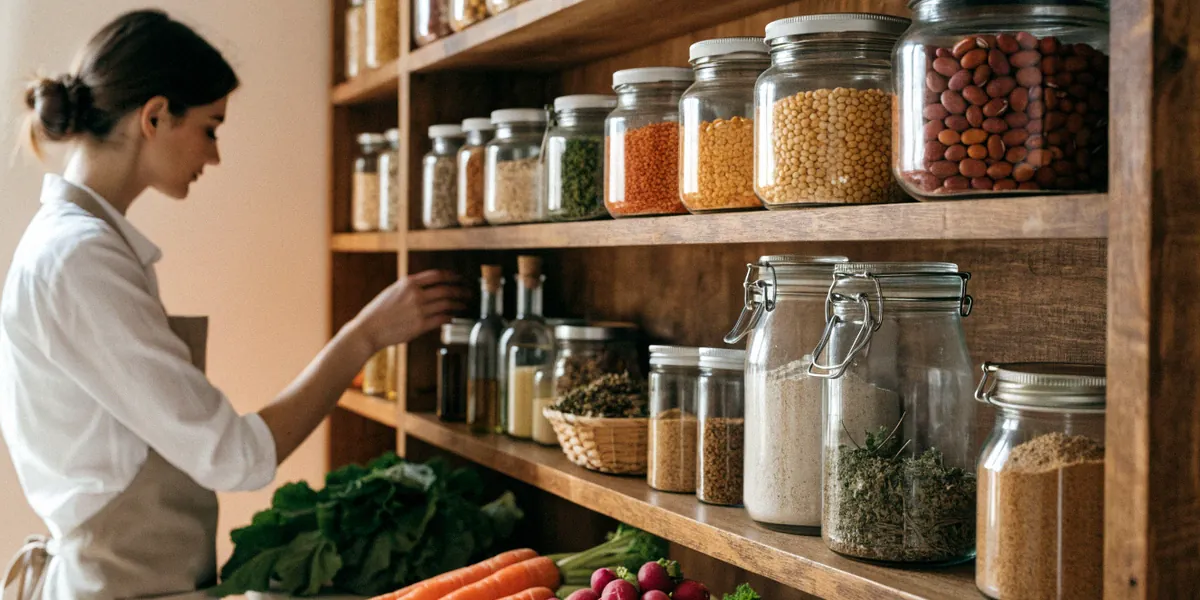
A good pantry isn’t about hoarding — it’s about readiness. When your shelves hold the right building blocks, plant-based cooking stops feeling like a project and starts feeling like dinner. It saves you time, stretches your grocery budget, and keeps good food from going to waste. And in Canada, where winter can run from October to April depending on where you live, having shelf-stable basics on hand means you’re never more than a snowstorm away from a warm, nourishing meal.
Saving Time on Weeknights
When quinoa, lentils, and canned chickpeas are already in the cupboard, a weeknight dinner comes together in 30 minutes or less. No emergency grocery run, no scrolling for inspiration at 5:45 p.m. You just cook what you have.
Budget-Friendly Meal Planning
Dry grains and legumes cost a fraction of prepared foods, and buying them in bulk lets you plan meals around what’s on sale rather than what’s convenient. A bag of dried lentils can anchor three or four dinners for the price of one takeout order.
Reducing Food Waste
Pantry staples don’t wilt. When you build meals around shelf-stable basics and add fresh produce as it’s available, you throw out far less — and that’s better for your wallet and the planet.
Whole Grains and Legumes: The Foundation of Our Pantry
If we had to pick the backbone of a plant-based kitchen, it would be grains and legumes. They’re versatile, affordable, and endlessly forgiving. We lean on Canadian brands like GoGo Quinoa, a Canadian company specializing in quinoa products, and Unico for reliable canned beans and tomatoes.
Quinoa: A Canadian Favourite
Quinoa cooks in 15 minutes, works in everything from salads to stuffed peppers, and delivers complete protein. GoGo Quinoa, based in Quebec, makes it easy to keep organic quinoa, flakes, and even quinoa pasta on hand year-round.
Lentils and Chickpeas: Protein Powerhouses
Red lentils melt into soups and curries; green and brown lentils hold their shape in salads. Chickpeas become roasted snacks, hummus, or the base of a hearty stew. Canned versions from Unico are a weeknight shortcut we always keep stocked.
Other Grains We Love
- Rolled oats for breakfasts, granola, and vegan baking
- Brown rice and wild rice for bowls and pilafs
- Buckwheat and millet for gluten-free variety
- Whole wheat and gluten-free pasta for quick dinners
Nuts, Seeds, and Nut Butters: Healthy Fats and Creamy Textures
Fat carries flavour and creates the creamy textures that make plant-based food satisfying. Our pantry always has tahini, almond butter, and hemp hearts on rotation. Nuts to You, a Canadian company known for its nut butters and tahini, is a brand we trust for quality and consistency.
Tahini: The Unsung Hero
Tahini is the backbone of dressings, sauces, hummus, and — surprise — many of our favourite vegan baked goods. A spoonful whisked with lemon, maple syrup, and water becomes an instant creamy dressing. In baking, it adds richness to brownies and cookies without dairy.
Hemp Hearts: A Canadian Superfood
Grown on the Prairies, hemp hearts are packed with protein and omega-3s. We sprinkle them on oatmeal, salads, and smoothie bowls for a nutty crunch and a nutrition boost.
Nut Butters for Baking and Snacking
Natural almond butter and peanut butter (just nuts and salt, please) are staples for toast, energy bites, and vegan cookies. Stir a spoonful into sauces for a satay-style finish.
Baking Essentials for Vegan Baking Success
Vegan baking is its own craft — and it works beautifully once you know the rules. You need binders, plant-based liquids, and unrefined sugars. Canadian brands like Earth’s Own, a Canadian company offering plant-based milks, make the dairy-free switch seamless.
Flax and Chia Eggs
One tablespoon of ground flax or chia plus three tablespoons of water equals one “egg” in most recipes. Let it sit five minutes until gel-like, then use it in muffins, pancakes, and quick breads.
Plant-Based Milks: Our Top Picks
Earth’s Own oat and almond milks are our go-tos for baking, coffee, and sauces. Oat milk brings a naturally sweet, creamy texture; almond milk is lighter and neutral. Both are reliably available across Canada.
Natural Sweeteners and Flours
We keep coconut sugar, maple sugar, and — of course — Canadian maple syrup on hand. For flours, our pantry holds all-purpose, whole wheat, almond, and oat flours so we’re ready for whatever recipe we’re testing.
Flavour Boosters: Sauces, Spices, and Condiments
Plant-based food tastes flat without a strong flavour arsenal. These are the bottles and jars that make our cooking sing.
Nutritional Yeast: The Vegan Umami Bomb
Nutritional yeast adds cheesy, savoury notes to sauces, popcorn, pasta, and scrambles. It’s fortified with B12 in most Canadian brands, which is a bonus for plant-based eaters.
Tamari and Soy Sauce Alternatives
Tamari is a gluten-free soy sauce with deeper flavour. We use it in stir-fries, marinades, and dressings. Coconut aminos are a lower-sodium option worth keeping too.
Canadian Maple Syrup: Liquid Gold
Canadian maple syrup is a natural sweetener and a staple in vegan baking — it replaces honey in almost any recipe and adds a warm, caramel-like depth. We always keep a dark grade on hand for baking and a lighter one for drizzling.
How to Build and Maintain Your Plant-Based Pantry
Building a pantry is one thing; keeping it working is another. A little structure goes a long way.
Storage Tips for Longevity
Transfer grains and flours to airtight glass or BPA-free containers. Label with the date. Keep nuts and seeds in the fridge or freezer to prevent rancidity. Store spices away from heat and light.
Shopping Strategies for Canadians
Bulk Barn is a Canadian bulk food store chain ideal for stocking up on pantry staples — you can buy exactly what you need and refill containers. Loblaws, Metro, and Save-On Foods carry most of the brands we’ve mentioned, and Canadian retailers like Well.ca are great for online restocks.
Rotating and Restocking
Use the “first in, first out” rule: move older items to the front and new ones to the back. Keep a running list on your phone so you know what’s running low before you shop.
FAQ
What are the most essential plant-based pantry staples for beginners?
Start with quinoa, dried or canned lentils and chickpeas, rolled oats, tahini, nutritional yeast, tamari, flaxseed, and a plant-based milk like Earth’s Own. These cover the majority of everyday recipes.
Where can Canadians buy tahini and nut butters in bulk?
Bulk Barn is a great option for refilling jars of tahini and nut butters. Many Loblaws and health food stores also carry Nuts to You products, a Canadian brand known for both.
Is maple syrup a good substitute for honey in vegan baking?
Yes. Canadian maple syrup is a natural sweetener and works one-for-one in most recipes, though you may want to reduce other liquids slightly since maple syrup is thinner than honey.
How long do pantry staples like quinoa and flour last?
Stored in airtight containers in a cool, dark place, quinoa lasts up to two years and whole grain flours about six months. Nuts and seeds keep longer in the fridge or freezer.
Do I need specialty Canadian brands, or will any brand work?
Any quality brand works, but Canadian options like GoGo Quinoa, Nuts to You, and Earth’s Own are widely available, well-priced, and made with Canadian kitchens in mind.
A well-stocked plant-based pantry is less about perfection and more about readiness. Start with a few staples — quinoa, tahini, chickpeas, flaxseed, maple syrup — and build from there. Before long, you’ll open those cupboard doors on the coldest Canadian evening and realize you already have everything you need for a wholesome, satisfying meal.