
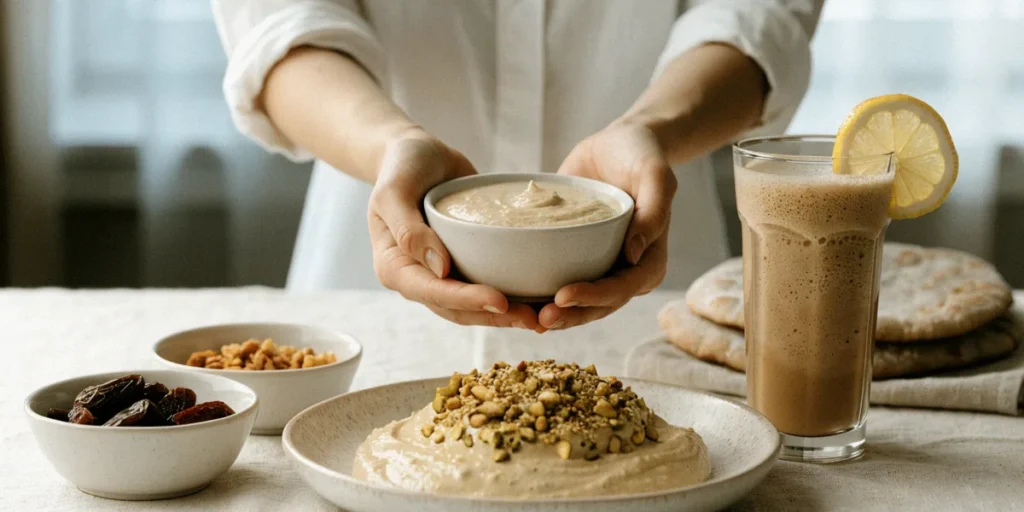
Cooking with Tahini: Sweet and Savoury
We still remember the first jar of tahini we brought home. It sat in the pantry for weeks because we only knew one use for it: hummus. Then one rainy Sunday, we stirred a spoonful into a lemon dressing, drizzled it over roasted carrots, and everything changed. That humble jar of sesame paste became the most versatile ingredient in our plant-based kitchen — swirling into brownies, thickening soups, and turning a plain bowl of quinoa into something we craved. If your tahini is still hiding behind the chickpeas, this guide is for you.
Why Tahini Deserves a Spot in Your Canadian Kitchen

Tahini is a staple in Middle Eastern cuisine, but it’s increasingly used in Canadian plant-based recipes — and for good reason. It’s rich, creamy, and loaded with nutrients, yet neutral enough to swing from savoury dinners to vegan baking without missing a beat. Whether you’re in Toronto, Montreal, or a small town in the Prairies, a good jar of tahini belongs next to your maple syrup and rolled oats.
What Exactly Is Tahini?
Tahini is simply ground sesame seeds — nothing more, nothing less in its purest form. The seeds are toasted and stone-ground into a smooth, pourable paste that ranges from light gold to deep beige depending on the roast. Think of it as the sesame equivalent of peanut butter, but with a slightly bitter, nutty edge that mellows beautifully when paired with lemon, garlic, or sweetness.
Nutritional Powerhouse: Healthy Fats, Protein, and Minerals
A couple of tablespoons of tahini delivers a serious nutritional punch:
- Healthy fats — mostly unsaturated, supporting heart health and helping your body absorb fat-soluble vitamins
- Plant protein — roughly 5 grams per two-tablespoon serving
- Calcium and iron — key minerals that plant-based eaters often need to watch
- B vitamins and magnesium — for energy metabolism and muscle function
That combination makes tahini a smart addition to whole foods cooking, especially when you’re building meals around quinoa, legumes, and vegetables.
Choosing Quality Tahini in Canada
We’ve tested a lot of jars, and Canadian brands hold their own. Nuts to You Nut Butter is a Canadian tahini brand based in Ontario, known for simple ingredients and consistent texture. Maison Orphée is a Quebec-based company producing organic tahini that we reach for when we want a lighter, more delicate roast. Both are widely available in grocery stores and online. When shopping, look for tahini with just one ingredient — sesame seeds — and avoid jars with added oils or preservatives. A quick stir at the store (if the jar allows) tells you a lot about freshness.
Savoury Ways to Use Tahini Beyond Hummus
Once you start thinking of tahini as a sauce base rather than a hummus ingredient, your weeknight cooking opens up. It pairs naturally with Canadian-grown quinoa, local produce, and the hearty root vegetables that carry us through winter.
Creamy Tahini Dressings and Sauces
Our go-to tahini lemon dressing takes about two minutes: whisk together ¼ cup tahini, juice of one lemon, one minced garlic clove, a pinch of salt, and enough cold water to thin it to a pourable consistency. It’s excellent on grain bowls, steamed greens, and roasted cauliflower. Add a splash of maple syrup if you want a rounder flavour.
Tahini in Soups and Stews
Stir a spoonful of tahini into lentil soup or a tomato-based stew right at the end of cooking. It adds body and a subtle creaminess without any dairy. Just temper it first — whisk a little hot broth into the tahini in a separate bowl before adding it to the pot, so it doesn’t seize.
Tahini as a Marinade for Tofu and Vegetables
Combine tahini with soy sauce, grated ginger, and a touch of maple syrup for a marinade that works on pressed tofu, tempeh, and thick slices of zucchini or eggplant. Let it sit for 30 minutes, then roast or pan-fry. The tahini caramelizes slightly and forms a savoury crust we can’t get enough of.
Sweet Surprises: Tahini in Vegan Baking
Tahini in desserts sounds unusual until you try it. It adds moisture, richness, and a subtle nutty depth that complements chocolate, banana, and warm spices. Canadian maple syrup is a natural sweetener that pairs especially well with tahini in vegan baking — its caramel notes soften tahini’s slight bitterness.
Tahini Chocolate Chip Cookies
Swap half the nut butter in your favourite vegan cookie recipe for tahini. The result is a chewier, more complex cookie with a hint of sesame. Dark chocolate chunks and a sprinkle of flaky salt on top take it over the edge.
Fudgy Tahini Brownies
Tahini and cocoa are a natural match. A generous swirl of tahini through brownie batter before baking creates ribbons of creamy richness that keep the brownies fudgy rather than cakey. Use maple syrup as part of your sweetener for a distinctly Canadian twist.
Tahini Swirl Banana Bread
Add a tahini-maple swirl to your standard vegan banana bread. Mix two tablespoons of tahini with one tablespoon of maple syrup, drizzle it over the batter, and drag a knife through for a marbled effect. It bakes into something that tastes far more impressive than the effort required.
Tahini and Whole Foods: Perfect Pairings
Tahini shines brightest when it’s paired with whole foods — the kind of ingredients that form the backbone of plant-based cooking. Quinoa, roasted vegetables, and legumes all benefit from its creamy, savoury character.
Tahini Quinoa Power Bowls
Cook up a batch of quinoa — we often use GoGo Quinoa, a Canadian brand offering quinoa and quinoa-based products — and layer it with roasted chickpeas, shredded kale, and pickled onions. Drizzle with tahini lemon dressing and finish with toasted seeds. It’s the kind of lunch that keeps us full until dinner.
Tahini with Roasted Canadian Root Vegetables
Carrots, parsnips, beets, and squash all love tahini. Roast them with olive oil and cumin, then serve over a swoosh of tahini sauce thinned with lemon and water. The sweetness of the vegetables against the nutty sauce is a combination we return to all winter long.
Tahini Dessert Hummus with Fresh Fruit
Blend chickpeas, tahini, maple syrup, vanilla, and a pinch of cinnamon for a dessert hummus that’s perfect with apple slices, strawberries, or pear. It’s a snack that feels indulgent but is built entirely from whole foods.
Tips for Cooking and Baking with Tahini
Tahini can be a little finicky if you’re new to it. These tips will save you from the common pitfalls.
Stirring and Storing Tahini
Natural tahini separates — the oil rises to the top and the paste settles at the bottom. That’s normal. Stir the whole jar thoroughly before each use, working from the bottom up. Store it in a cool, dark cupboard rather than the fridge. In Canadian winters, cold kitchens can make tahini stiff and hard to stir, so if yours is solid, set the jar in a bowl of warm water for a few minutes.
Balancing Flavours: Lemon, Maple, and Spices
Tahini’s slight bitterness is best balanced with acid and a touch of sweetness. Lemon juice is the classic partner; maple syrup works beautifully in sweet applications. Cumin, coriander, cinnamon, and smoked paprika all complement tahini’s nutty profile.
Common Mistakes to Avoid
- Overheating. Tahini can turn bitter if heated too aggressively. Add it at the end of cooking or use moderate heat.
- Adding it cold to hot liquid. Temper it first to prevent seizing.
- Skipping the stir. Unstirred tahini gives you either oily sauce or dry paste — neither is what you want.
- Using old tahini. Sesame paste goes rancid over time. Smell it before you cook with it.
Tahini is one of those ingredients that rewards curiosity. Try it in a dressing this week, then a brownie next weekend. Before long, you’ll wonder how you ever cooked without it — and your Canadian plant-based kitchen will be better for it.
FAQ
Is tahini always vegan?
Pure tahini — ground sesame seeds — is naturally vegan. Always check the label, since some flavoured or blended versions may include honey or dairy.
Can I use tahini instead of nut butter in recipes?
Often, yes. Tahini works as a one-to-one swap in many dressings, sauces, and baked goods, though the flavour will be nuttier and slightly more bitter. It’s especially good in chocolate recipes.
How long does tahini last once opened?
Most jars keep for six months to a year in a cool, dark cupboard. Refrigeration can extend shelf life but makes it harder to stir. Always trust your nose — rancid tahini smells sharp and unpleasant.
Where can I buy Canadian tahini brands?
Nuts to You Nut Butter (Ontario) and Maison Orphée (Quebec) are both widely stocked in Canadian grocery stores, health food shops, and online retailers. Availability varies by province, so check your local store or order directly.
Why did my tahini sauce turn thick and clumpy?
This usually happens when cold tahini meets hot liquid too quickly. Whisk a little warm water or broth into the tahini first to loosen it, then add the rest gradually.