
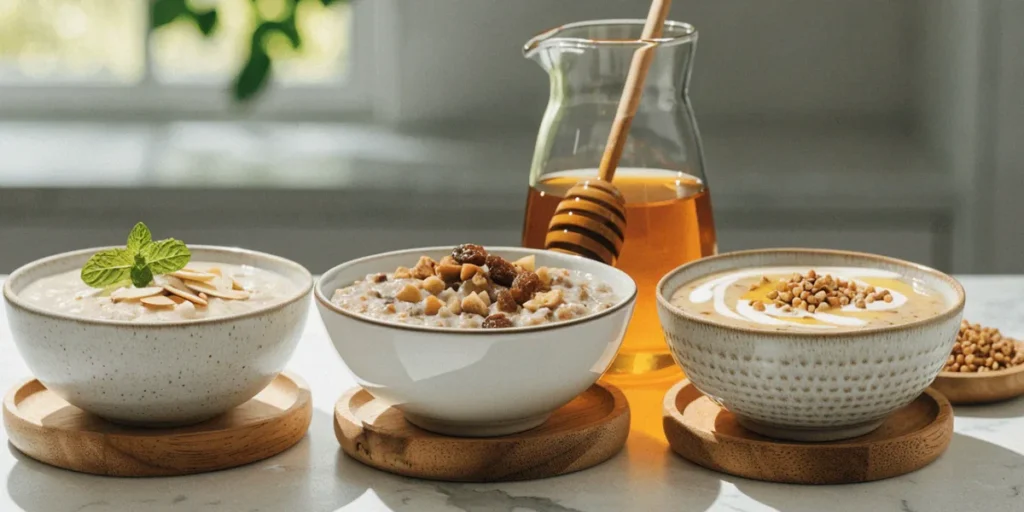
Buckwheat Porridge Three Ways: A Wholesome Plant-Based Breakfast
On a frosty January morning in Winnipeg or a damp November day in Halifax, there are few things more comforting than wrapping your hands around a warm bowl of porridge. We have nothing against oatmeal, but buckwheat deserves a spot in your breakfast rotation too. It cooks up creamy, nutty, and satisfying, and it takes beautifully to both sweet and savoury toppings. Below, we share our master recipe for creamy buckwheat porridge with tahini, then show you three distinct ways to dress it up: a maple apple cinnamon version, a savoury mushroom and kale bowl, and a protein-packed quinoa and berry combination. Whether you are new to whole foods cooking or a seasoned plant-based home cook, these recipes are simple, affordable, and built for Canadian kitchens.
Why Buckwheat Belongs in Your Plant-Based Pantry
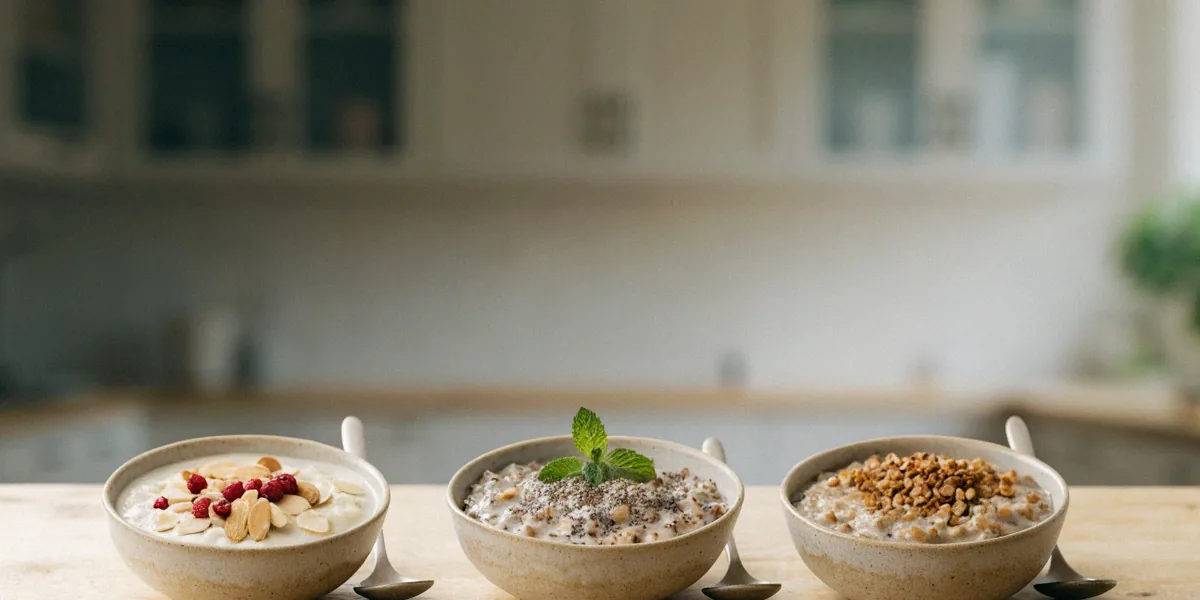
Despite the name, buckwheat is not related to wheat at all. It is a pseudocereal, meaning it is a seed we cook and eat like a grain. That makes it naturally gluten-free, which is welcome news for anyone managing celiac disease or gluten sensitivity. It is also a genuine whole food: minimally processed, fibre-rich, and a source of plant protein. A single cup of cooked buckwheat groats delivers roughly six grams of protein and five grams of fibre, along with magnesium, manganese, and antioxidants like rutin.
For plant-based eaters, buckwheat is a quietly powerful addition to the pantry. It keeps you full through a long morning, blends into both sweet and savoury dishes, and costs far less than many specialty breakfast products. If you are already cooking with quinoa and tahini, buckwheat is the natural next step.
Nutritional Benefits of Buckwheat
Here is what one cup of cooked buckwheat groats brings to the table:
- About 155 calories and 6 grams of plant protein
- Roughly 5 grams of dietary fibre, supporting digestion and steady blood sugar
- Magnesium, manganese, copper, and phosphorus
- Rutin and other flavonoids with antioxidant properties
- Naturally gluten-free, making it safe for celiac diets
We often pair buckwheat with oats in our breakfast rotation. If you are buying oats, look for certified gluten-free options. Only Oats is a Canadian gluten-free oat brand based in Saskatchewan, and we keep a bag in our own pantry for cross-checking recipes.
Where to Buy Buckwheat in Canada
Buckwheat groats are easier to find than you might think. Look for them in:
- Bulk and natural food stores such as Bulk Barn, which carries raw and toasted groats
- The health aisle of Loblaws, Metro, and Sobeys
- Online retailers like Well.ca and Amazon Canada
- Local farmers’ markets, especially in Quebec and Ontario where buckwheat is grown
You will see two main types on shelves: raw groats (pale greenish-tan) and kasha (toasted, darker brown). We prefer toasted groats for porridge because they bring a deeper, nuttier flavour to the bowl.
Base Recipe: Creamy Buckwheat Porridge with Tahini
This is our master recipe. Make it once, and you have a template for all three variations below. It serves two generously, or four smaller bowls.
- 1 cup toasted buckwheat groats, rinsed well
- 2 cups water or unsweetened almond milk (or a mix)
- 1/4 teaspoon fine sea salt
- 2 tablespoons tahini, plus extra for drizzling
- 1 teaspoon vanilla extract (optional)
Combine the groats, liquid, and salt in a medium saucepan. Bring to a boil, then reduce heat, cover, and simmer for 15 to 20 minutes until the groats are tender and the liquid is mostly absorbed. Stir in the tahini and vanilla, then let the pot sit covered for five minutes off the heat. The porridge will thicken as it rests. Add a splash more milk if you like a looser consistency.
For tahini, we reach for Nuts to You Nut Butter, a Canadian producer based in Paris, Ontario. Their sesame tahini is smooth, pourable, and free of the bitterness you sometimes find in imported jars.
Soaking and Cooking Buckwheat Groats
Soaking is optional but helpful. A quick rinse under cold water removes any dusty residue. If you want a faster cook and easier digestion, soak the groats in water for two hours or overnight, then drain before cooking. Soaked groats cook in about 10 to 12 minutes.
Achieving the Perfect Creamy Texture
The trick to creamy buckwheat porridge is threefold: use a 2:1 liquid-to-groat ratio, stir in tahini at the end, and let the pot rest off the heat. Tahini acts as a natural emulsifier, giving the porridge a silky body without any dairy. If your porridge tightens up too much, whisk in warm milk one tablespoon at a time until it flows off the spoon.
Variation 1: Maple Apple Cinnamon Buckwheat Porridge
This is the version we make most often when the temperature drops. Diced apples, warm cinnamon, and a generous drizzle of maple syrup turn the base recipe into something that tastes like a baked dessert for breakfast.
Prepare the base porridge as above. While it simmers, sauté two peeled and diced apples in a teaspoon of coconut oil with a pinch of cinnamon until they are golden and soft.
Sautéing Apples for Depth of Flavour
Do not skip the sauté. Raw apples stirred into porridge stay crunchy and a little flat. Cooking them in a hot pan caramelizes their natural sugars and softens their texture, so they melt into the bowl. A pinch of salt and a dusting of cinnamon while they cook deepens the flavour further.
Sweetening Naturally with Maple Syrup
We sweeten this bowl with pure Canadian maple syrup, and we are particular about it. Quebec produces the majority of Canada’s maple syrup, and the province’s amber and dark grades bring a robust flavour that stands up to buckwheat’s earthiness. One to two tablespoons per bowl is plenty. Stir it in at the end so the aroma stays bright.
Variation 2: Savoury Mushroom and Kale Buckwheat Porridge
If you have only ever eaten sweet porridge, this bowl will change your mind. Savoury buckwheat porridge is essentially a soft, spoonable grain dish, closer to a risotto than a breakfast cereal. Sautéed mushrooms, wilted kale, and a sprinkle of nutritional yeast make it deeply satisfying.
Cook the base porridge, but skip the vanilla and reduce the tahini to one tablespoon. While it simmers, sauté 200 grams of sliced mushrooms in olive oil until browned, then add two handfuls of chopped kale and cook until just wilted.
Building Umami with Mushrooms
We use local Ontario mushrooms whenever we can find them at our farmers’ market. Cremini, shiitake, and oyster mushrooms all work. The key is to let them brown undisturbed in the pan before stirring. That browning is where the umami lives. A splash of tamari or soy sauce at the end amplifies it further.
Adding Greens for Extra Nutrition
Kale is a Canadian-grown staple in most of our grocery stores, and it holds up well against warm grains. If kale is not your favourite, Swiss chard or spinach work just as well. Fold the greens in at the very end so they keep some bite.
Variation 3: Quinoa and Berry Buckwheat Porridge
For a protein-packed bowl, we cook buckwheat and quinoa together in the same pot. The two grains have similar cook times when quinoa is rinsed well, and together they deliver a complete amino acid profile. Top with berries and a drizzle of tahini, and you have a breakfast that keeps you full until lunch.
Use 1/2 cup buckwheat groats and 1/2 cup rinsed quinoa with 2 1/2 cups liquid. Simmer for 18 to 20 minutes, then stir in tahini and a pinch of salt.
Cooking Quinoa for Breakfast
Always rinse quinoa before cooking to remove its natural saponin coating, which can taste soapy. For breakfast, we prefer white quinoa for its lighter flavour, though tri-colour works too. Cook it with the buckwheat rather than separately to save a pot and time.
Layering Fresh and Frozen Berries
In summer, we pile on fresh Ontario strawberries and blueberries. In winter, frozen berries are just as nutritious and far more affordable. PC Organics offers frozen Canadian berries, which we keep stocked year-round. Stir a handful of frozen berries directly into the hot porridge and they will thaw and release their juices, creating natural sweetness without added sugar. Save a few fresh berries for the top.
Meal Prep and Storage Tips for Busy Canadian Mornings
Weekday mornings are not the time to be simmering grains. We cook buckwheat in bulk on Sunday and portion it out for the week ahead.
Batch Cooking Buckwheat
Cook a double or triple batch of the base recipe, let it cool completely, then divide it into individual portions. We use half-litre Mason jars, which hold a single serving perfectly and are microwave-safe. Canadian Tire sells affordable Mason jars in multi-packs, and we have picked up sets there for under fifteen dollars.
Freezing and Reheating Porridge
Buckwheat porridge freezes beautifully. Fill jars to about three-quarters full to leave room for expansion, then freeze for up to three months. To reheat, thaw overnight in the fridge and warm on the stovetop or in the microwave with a splash of almond milk. The porridge will loosen as it warms. Add your toppings fresh after reheating so they keep their texture.
Wholesome plant-based breakfasts do not have to be complicated or expensive. A bag of buckwheat groats, a jar of Canadian tahini, and whatever fruit or vegetables you have on hand are enough to build a week of satisfying mornings. We encourage you to treat these three variations as starting points rather than rules. Swap in pears for apples, add roasted squash to the savoury bowl, or top the quinoa version with toasted nuts. The bowl is yours to shape.
FAQ
Is buckwheat actually gluten-free?
Yes. Buckwheat is a pseudocereal, not a wheat product, and it is naturally gluten-free. That said, if you have celiac disease, check labels for certified gluten-free packaging to avoid cross-contamination during processing.
Can I make buckwheat porridge in a slow cooker or Instant Pot?
Absolutely. In an Instant Pot, combine one cup of groats with two cups of liquid and cook on high pressure for six minutes, then natural release for ten. In a slow cooker, use a 1:3 ratio and cook on low for four to five hours.
Where can I find tahini in Canada?
Most major grocery chains carry tahini in the international or health food aisle. We recommend Nuts to You Nut Butter, a Canadian producer based in Ontario, whose tahini is widely stocked across the country and available online.
How long does cooked buckwheat porridge keep in the fridge?
Stored in an airtight container or Mason jar, cooked buckwheat porridge keeps for four to five days in the refrigerator. Reheat with a splash of milk or water to restore its creamy texture.
Can I use raw buckwheat groats instead of toasted?
Yes, though the flavour will be milder and slightly less nutty. Raw groats also cook a little faster. If you want more depth, toast raw groats in a dry pan for three to four minutes before cooking.